Your vote should shape the story, not only change the cast
Elections can remove a government. That matters. But when citizens have little influence over the machinery of policy between elections, voting can feel like an emergency veto: a chance to replace the actors while the storyline remains familiar. 3rd Economics asks where power actually sits. Who sets the available choices? Who funds them? Which decisions are insulated from public challenge? Can people initiate alternatives, or only choose between packages offered by established organisations?
What if 80% of decisions did not need political intervention?
The figure is a provocative research hypothesis, not a measured global finding. We want to identify which recurring decisions could be handled through better institutional design, local choice and reliable operating arrangements—and which require democratic judgment. If housing, education, healthcare, transport and income distribution worked substantially better without constant discretionary intervention, central authority would have less opportunity to ration favours. It would still face questions about rights, collective priorities, conflict and exceptional events.
Automatic does not mean beyond challenge
An automated decision can encode a bad assumption or concentrate power in its designer. Citizens need ways to understand the consequences, contest errors, change the arrangement and stop it when circumstances change. Separate routine operation from the authority to choose goals. Removing day-to-day political interference should not remove democratic control over the system itself.
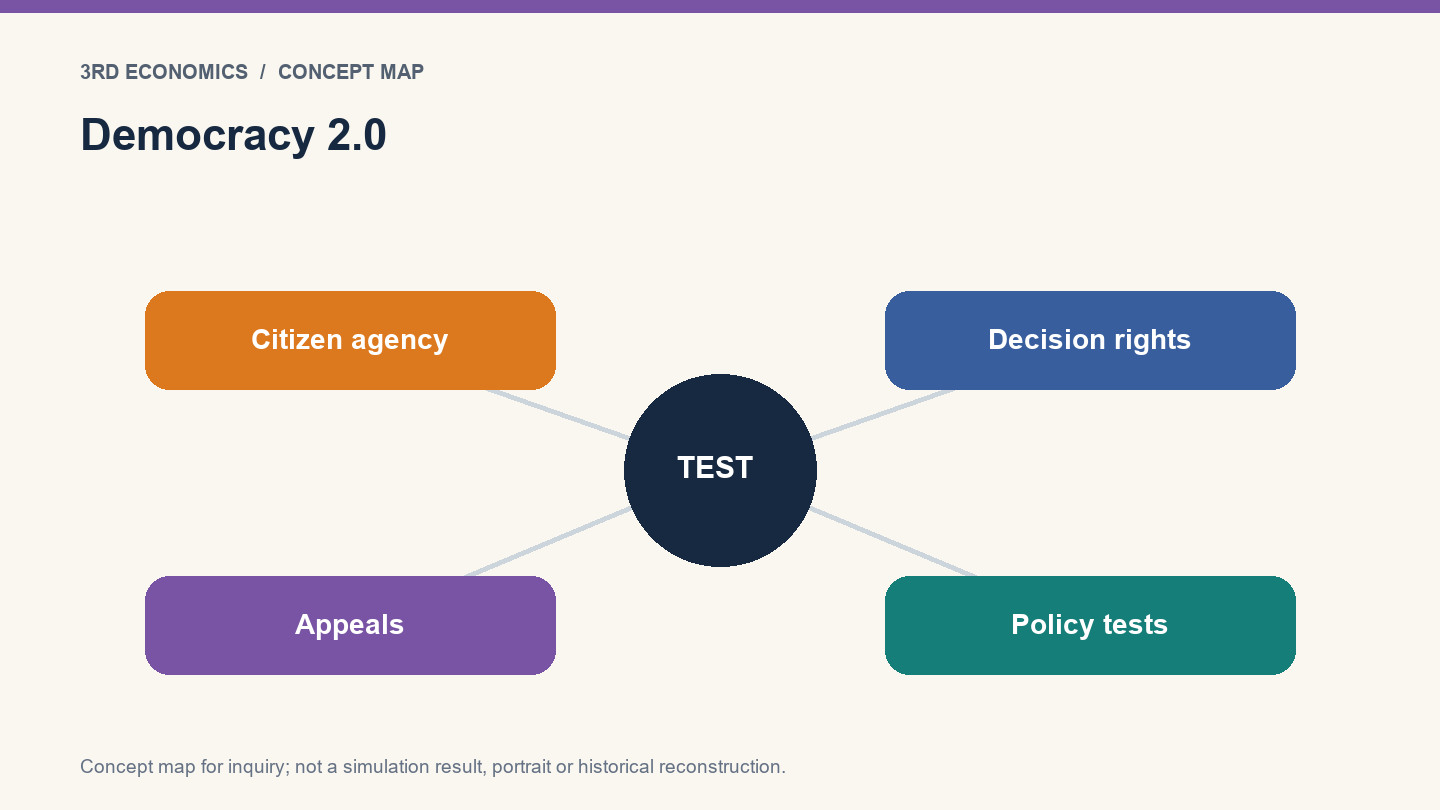
Democracy 2.0: questions to test
Can citizens initiate a policy experiment? Can different local arrangements coexist? Can a minority appeal a harmful decision? How are large shared problems coordinated? What happens when a popular preference conflicts with rights or with consequences for future generations? Our working title “Democracy: Fool’s Gold?” challenges the gap between formal choice and practical agency. It is not an argument for abolishing voting or replacing citizens with AI.
A concrete starting point
Take a recurring housing decision. Identify who currently decides, who can object, how long it takes and what it costs. Compare arrangements that reduce discretion while preserving appeals and collective control. Publish which decisions still require political judgment.