Could nature help us make the housing problem disappear?
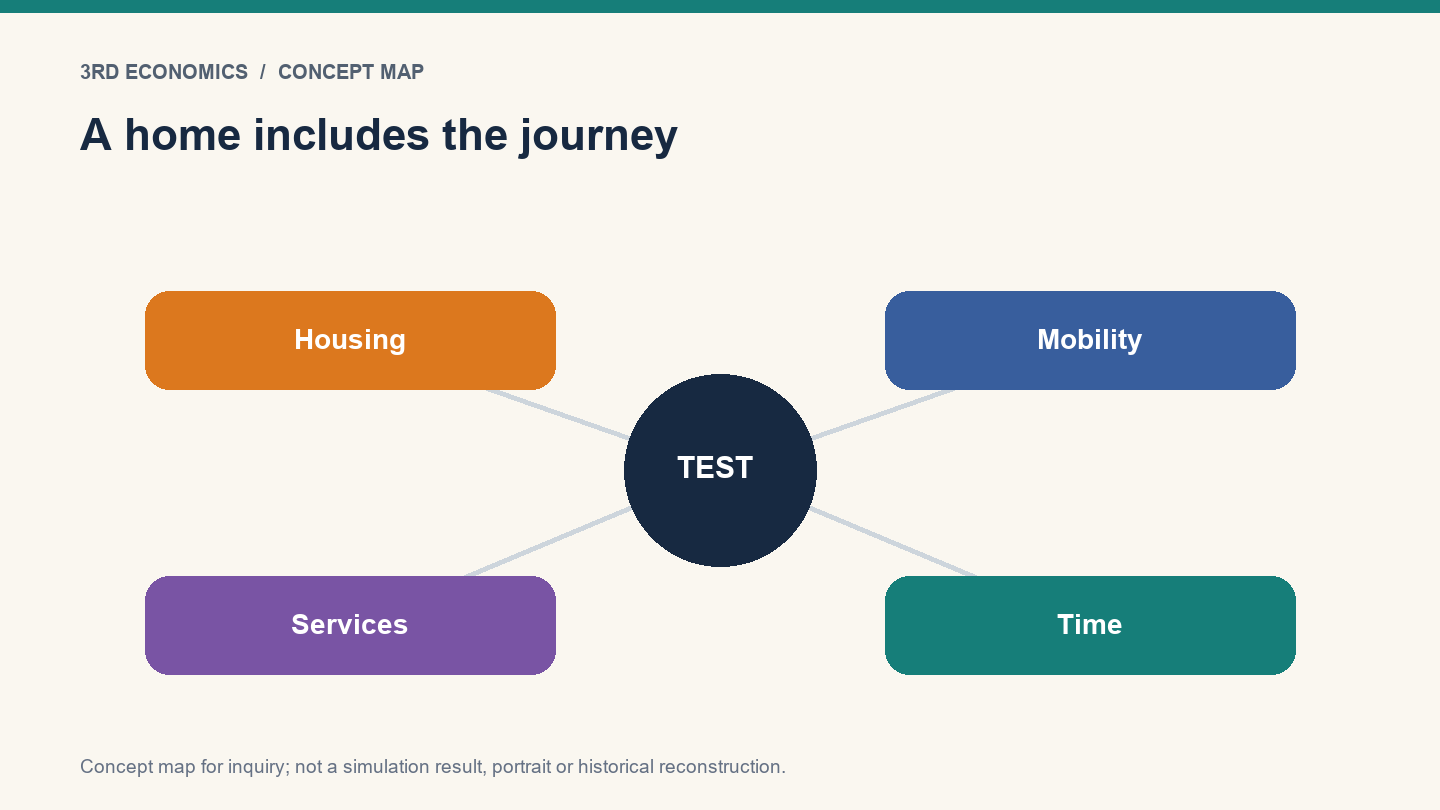
A home is not just a structure. It is access to work, learning, care, food and other people. A cheap building that requires an expensive daily journey may not produce an affordable life. What if we studied housing through physics, biology and evolution? Living systems move materials, energy and information through networks. They adapt to local conditions, reuse structures and survive through relationships between parts. These are starting points for design questions—not ready-made instructions for a city.
Count the whole cost of living somewhere
Treat transport as part of housing cost. Compare rent or finance, utilities, maintenance, fares, vehicle ownership and time spent travelling. Add access to schools, care, work and social life. A housing model that ignores these costs can declare success while households remain trapped.
Questions for the experiment
Could modular construction, spatial proximity, shared infrastructure and better network design reduce the resources required per household? When does density improve access, and when does it create heat, crowding or other costs? How should a neighbourhood adapt when work and technology change? Test alternatives across household sizes, disabilities, incomes, climate and existing settlement patterns. Include land access and financing so an attractive building design does not hide the political economy around it.
What would count as success?
A lower combined cost of shelter and movement; less time lost; good access to essential services; durability; and freedom to choose a different arrangement. A design that only works after displacing existing residents has not solved their housing problem. Proposed discussion: Megha and Prof Prem invite a biologist, a transport-network researcher, a construction specialist and residents to examine one neighbourhood.