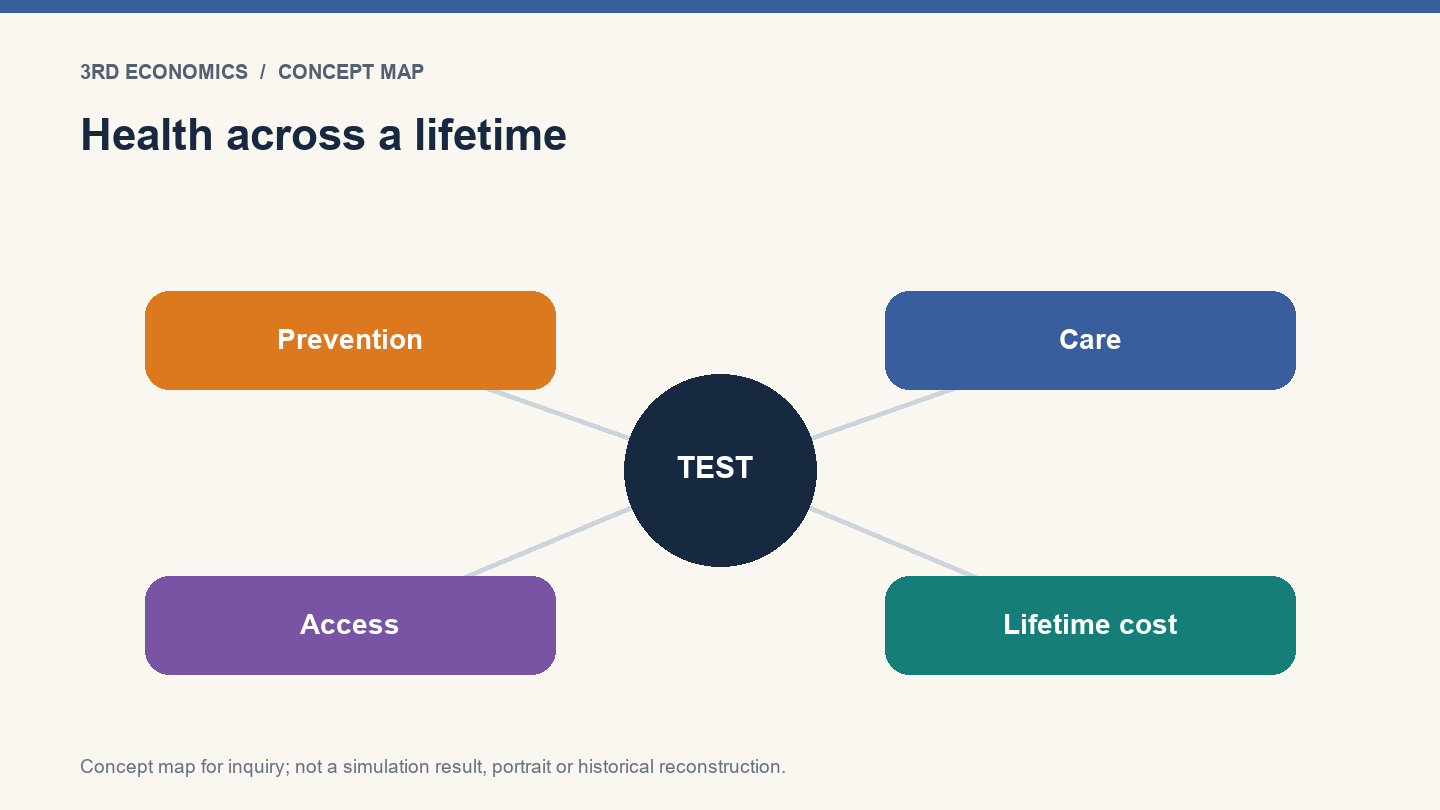
What if more and better healthcare cost us less?
A system can spend heavily because it intervenes late, repeats work or rewards activity rather than health. The question is whether better prevention, earlier detection, effective treatment and improved delivery can reduce the total burden of illness. More care is not automatically better care. Unnecessary procedures can add cost and harm. The Lab will distinguish useful care from additional activity and compare lifetime outcomes rather than a single bill.
Follow the consequences beyond the hospital
If people live longer and remain healthy, what happens to work, retirement, saving and family support? How should medical expenses be funded? How does an older electorate influence public spending? Who benefits from medical advances first, and who pays for access? Mehta’s discussions connect longevity to these economic and political consequences. Claims about near- term medical advances must be separated from speculative futures.
Proposed experiment
Compare funding and delivery arrangements across prevention, acute care and long-term conditions. Track health outcomes, household costs, public costs, workforce needs and unequal access. Include a scenario where a treatment works medically but remains too expensive to reach most people.